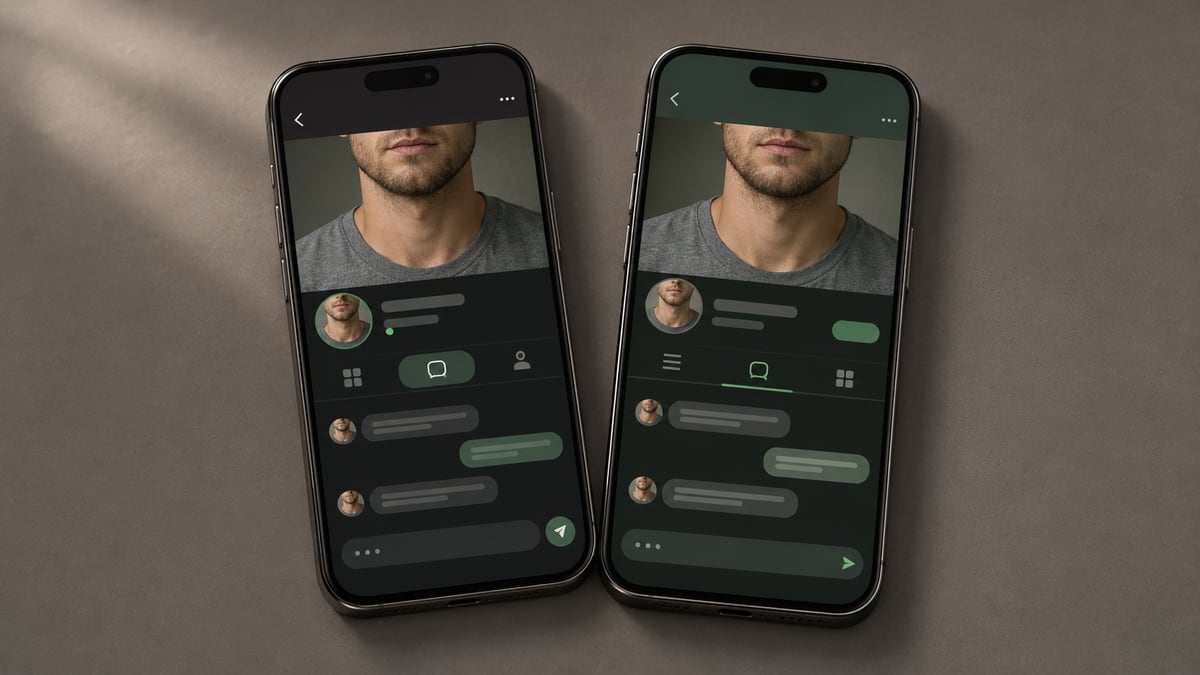
Fraudsters have used photographs of Hunter Bigham for more than eight years to build hundreds of fake online profiles and take money from people seeking romance. The victims who later tracked him down have been credited with roughly $1.4 million in losses. Bigham is not the scammer. He is the man whose face was copied.
When victims realise the deception, many search for the person in the pictures and reach Bigham. At the peak, he says, as many as 15 victims contacted him in a day. They came from the United States, Spain, Venezuela and Hong Kong, and included cancer survivors, a retired police officer and a chief executive. They knew him not as Hunter but as Vince, Roberto and, most often, Henry Clerk.
Under that name alone, sometimes spelled Clark, The Associated Press found 177 Facebook accounts using his photos. The scammers have cast him as a widowed petroleum geologist in Houston, as a Spanish secret agent named John, and frequently as an oil-rig worker stuck at sea. The real Bigham is a father of three who lives with his husband, Johnny, in Tupelo, Mississippi, and works by phone as a sales executive for a furniture manufacturer.
Some people who still believe he is the perpetrator threaten to hurt him, his family and themselves. One victim cursed at him, said he knew where Bigham lived and vowed to destroy his son's career. An American man who lost $600,000 named Bigham's oldest son, threatened to ruin the young man's career, wrote that he wanted to kill himself and later left a voicemail demanding the money in cash. Bigham says he blocked him after the man wrote that he knew where Bigham lived in Mississippi.
Other losses described to him include $75,000 taken in 2019 from a cancer survivor by a scammer who claimed to be his nonexistent identical twin, and 265,000 Canadian dollars, about $190,000, from a Canadian woman battling cancer. In France he met a Swiss finance professional who had lost 48,000 euros, about $54,000, to a supposed geologist using his photos; the poser later admitted he was a scammer from Nigeria.
Bigham says platform requests to remove fake profiles have largely been rejected and that complaints to the FBI have got him nowhere. The FBI told the AP it could not comment on individual complaints. He says he holds the platforms most responsible. "They could stop this today."
Meta told the AP that in the first half of 2026 it removed more than 179 million accounts, pages and groups for misrepresenting identity, most before anyone reported them, and that new AI tests cut reports of the most impersonated celebrities by more than 80 percent. It said it removed four accounts Bigham recently reported and is investigating his case. LinkedIn told the AP that 99.7 percent of the fake accounts it removes are shut down before anyone reports them.
Bryan Denny, a retired U.S. Army colonel whose pictures have been used for a decade, said his group Advocating Against Romance Scammers has reported more than 3,000 fraudulent profiles of him to Facebook. Rebecca Keithley, who retired in July as an assistant section chief in the FBI's Financial Crimes Section, said she was impersonated twice online this year. "I'm at a loss for what to do," she said. "I have no confidence in Meta's security's ability to do anything."
Bigham and Johnny expect the impersonation to continue unless the platforms change their rules. "I think we're faced with this for a very, very long time," he said.