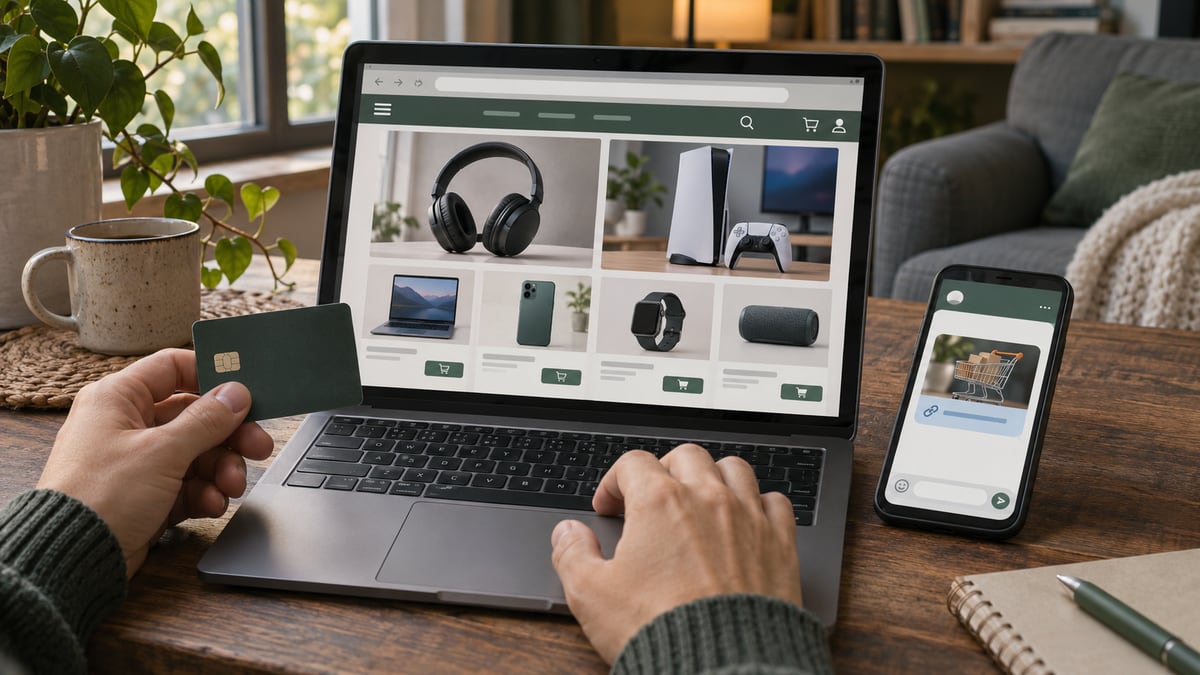
Online offers around Black Friday and Cyber Monday draw millions of shoppers and also cybercriminals. Fake stores, brand impersonation, phishing messages and fraudulent promotions multiply during these campaigns, when the rush to secure a discount can lead people to lower their guard. Artificial intelligence adds a further risk by making it possible to create websites, emails and advertisements that are increasingly hard to tell from genuine ones.
In Spain, 45,445 online fraud incidents were recorded in 2025, 19% more than the previous year, according to the Cybersecurity Balance of the National Cybersecurity Institute (Incibe), cited by the National Police. Globally, Kaspersky detected more than 19 million phishing attempts against users of online stores and banks between January and October 2026, 198% more than in the same period of 2025.
Miguel López, director for Southern Europe at Barracuda Networks, told Infobae that the problem lies less in new kinds of attack than in the spread of existing ones. He said it is not that there are novel attacks, and that what is happening is that attacks which already exist are speeding up.
One of the most common methods is to create online shops that imitate legitimate stores or sell products that do not exist. Jesús Alcalde, co-founder and chief technology officer of Flameera, cites demand for the PlayStation 5 linked to the launch of GTA VI. With limited stock and high resale prices, supposed chances to buy at prices close to the usual ones appear. The buyer pays, but the product never arrives. These shops can run advertising campaigns, keep social-media profiles and offer full catalogues. Their aim is to attract as many buyers as possible before they disappear. Alcalde describes this strategy as a kind of trawl fishing.
Another method is to impersonate well-known brands and direct victims to fraudulent pages. Amazon was the most imitated company, with 3.1 million phishing detections and an increase of 411.6% compared with 2025, according to Kaspersky. Netflix followed with 1.36 million cases, up 70.5%, then Apple, Shopify and Alibaba Group. These five platforms account for 83.8% of attacks against stores and subscription services.
Fraudulent messages sent by email, SMS or social networks are another main threat. They often announce exclusive discounts, problems with orders or promotions that require bank details or login credentials to be entered on a fake page. López said artificial intelligence makes it possible to produce phishing emails that are practically perfect and indistinguishable from legitimate ones, even without advanced technical knowledge. It also makes it easier to build pages that closely reproduce the appearance of known shops. Deepfakes of famous people promoting products or offers that do not exist are added to these techniques.
The volume of fraudulent messages rises during commercial campaigns. Kaspersky detected 220,071 spam messages on this theme in the first two weeks of November, 50.2% more than in 2025.
The padlock shown next to a web address does not guarantee that a shop is legitimate, although it is the only thing many people look at. López warns that criminals can register domains very similar to the originals by changing one letter or adding a hyphen. In those cases the security certificate can be valid for the fake address, and the browser will still show a secure-connection indicator. Looking at the design or the wording of a page is not enough either, because artificial intelligence can replicate both with great precision.
Alcalde recommends checking reviews, looking into the age and activity of a shop’s social networks, and distrusting Google or Microsoft sign-in processes that request unusual permissions, such as access to email. Experts advise people to avoid links received by SMS or social networks and to go directly to official pages. They also recommend keeping devices updated and using single-use virtual cards limited to the amount of the purchase.
The consequences can go beyond losing the money from a purchase. If criminals obtain personal data, they can use it months later to apply for loans or commit other frauds. They can also take over accounts and use them to deceive the victim’s contacts.
If fraud is suspected, the related emails, messages, payment receipts and web addresses should be collected. The next step is to contact the bank to block the card or payment method and try to stop the transaction. Compromised passwords should be changed, two-step verification activated, and an antimalware scan run on the devices used. Alcalde recommends warning contacts if control of an account has been lost, calling Incibe on 017 for advice, and filing a complaint with the authorities.
During Black Friday, haste to take advantage of a discount can become the scammers’ main ally. Checking who is selling, verifying the web address and distrusting disproportionate offers remains essential before providing any data or making a payment.