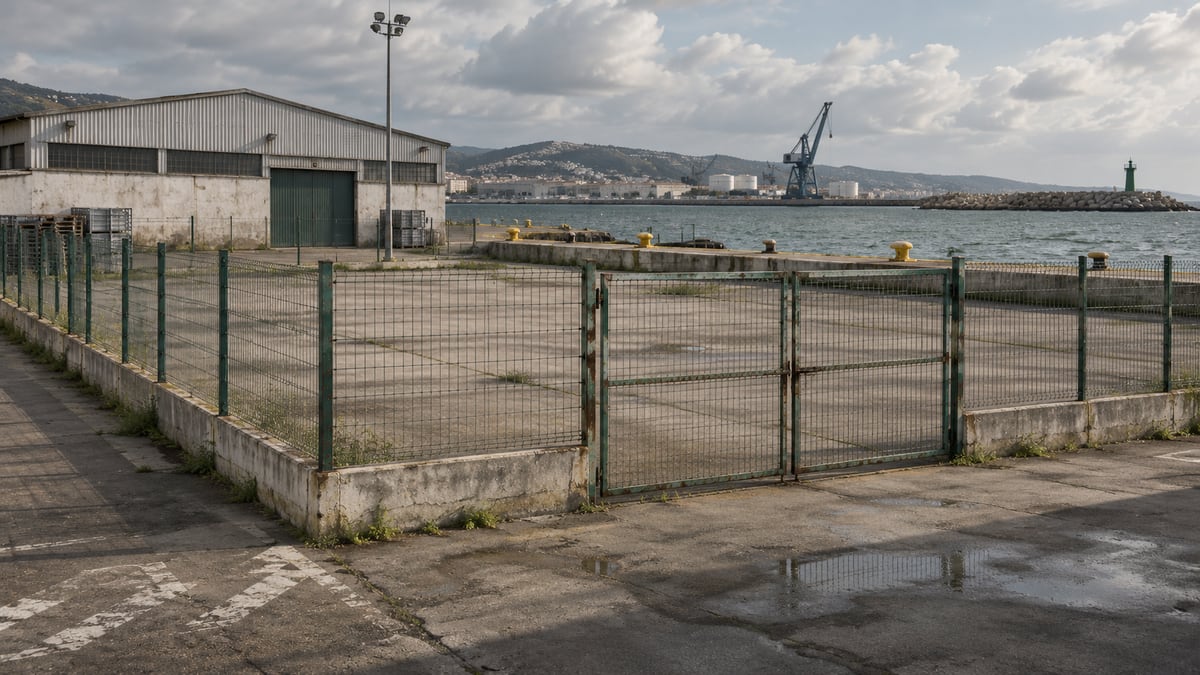
The Government Delegation in Ceuta called an informal on-site meeting 24 hours before the mass irregular entry of migrants into the autonomous city. Commanders of the Guardia Civil and the Policía Nacional and the Port Authority took part. The delegation put to the port authority the possibility of using a provisional plot in the port as a temporary care centre for foreign nationals.
The port authority, which reports to the Ministry of Transport, sets this out in a written submission to María Tardón, the investigating magistrate at the Audiencia Nacional. It tells her that the option did not come to fruition. The account indicates that, the day before the mass entry began, the delegation was already dealing with a sizeable rise in arrivals that would require a temporary reception centre. That was so even though the then head of the delegation, Miguel Ángel Pérez Triano, denied that his chief of staff had passed him the alert from the CNI.
A photograph also sent to Tardón shows that the autonomous president, Juan Jesús Vivas, Pérez Triano and several police commanders were among those present. The meeting followed several days in which the Maritime Service of the Guardia Civil had transferred to the port facilities migrants who had reached Spain by swimming in the preceding hours.
On the security-camera images from the Port of Ceuta that Tardón requested, the port authority says it holds only the recordings of the last thirty days, from 20 September onwards. Its reply to the court is dated 20 October. It would therefore not have the images from the key 48 hours of the migratory surge. It says the data-protection law requires images from those cameras to be destroyed within one month, unless they are needed for ongoing criminal investigations, in which case the period extends to three months unless a court orders otherwise. It notes an exception for serious or very serious criminal offences concerning public security, which it assumes applies in this case. Tardón opened the proceedings on 3 August after a complaint by Iustitia Europa. The Port of Ceuta nevertheless says it has no recordings from before 20 September, seven weeks after the mass entry.
The port authority also tells the magistrate that it has no cameras in the border zone because its facilities are at the other end, so it only has images of the port public-domain area. It says that sending 100 percent of the images would mean an approximate volume of 16 terabytes, and it asks her to say whether that is necessary or whether some area of the port, or the interior-camera recordings, could be left out.
In another document, answering her request for all recordings of the border zone, the body says the meeting responded to the urgent need to address the emergency the autonomous city was facing after more than a thousand entries of migrants, both adults and minors, were recorded in the previous week. In the same statement, the Ceuta delegation said the situation put extraordinary pressure on existing reception resources and ended up collapsing the child-protection system and the Centro de Estancia Temporal de Inmigrantes. It said the situation had been conveyed urgently to the highest institutional level, and that the scale of the migratory pressure on Ceuta required an extraordinary and immediate response.
The delegation has sent the judge a further report on meetings in the days before the mass entries of 30 and 31 July. It acknowledges that it has no further information on how some of the meetings on Pérez Triano's official agenda unfolded or what was discussed. The report, which lists other meetings and events on the former delegate's agenda for 27, 28 and 30 July, contains no reference to the 29 July meeting at the port. The delegation has also told the magistrate that it has no direct access to the cameras or to the recording and storage systems for the border zone, and that it has asked the security forces responsible for the border to provide the material so it can be handed over.