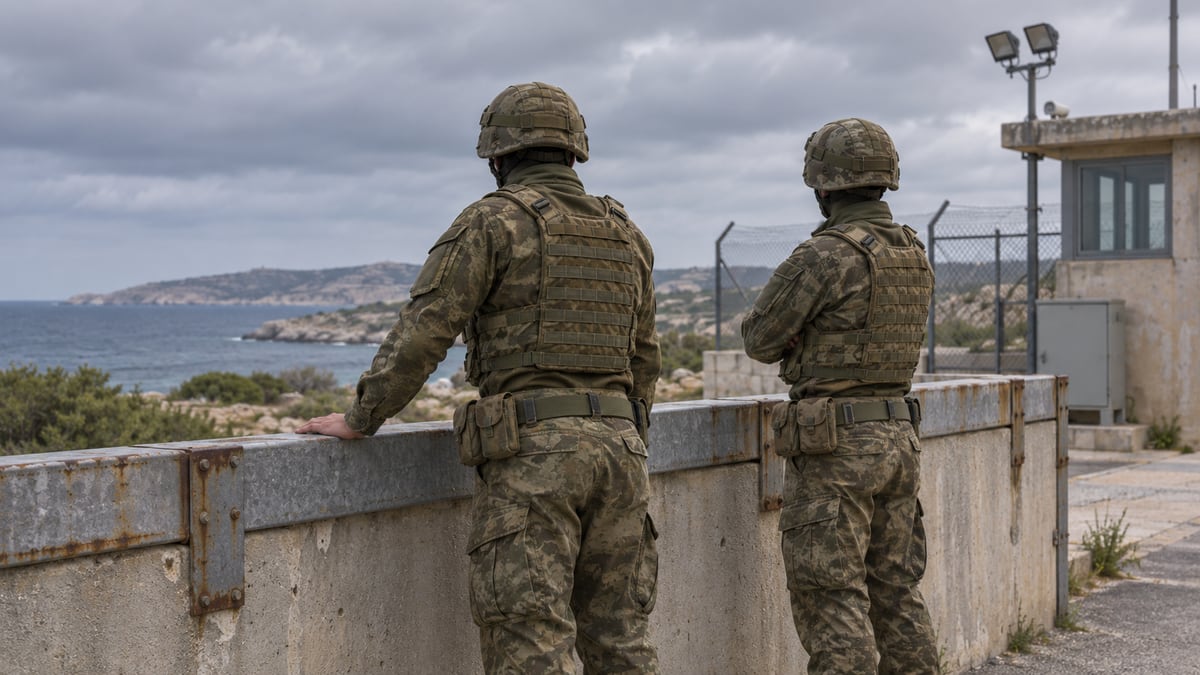
The Spanish Army association ATME has warned of discontent among service members posted to Ceuta and of a possible departure of personnel seeking to leave their posts after events last summer. It links the strain to violence during a mass entry of migrants and says the migration crisis of 30 July may also be affecting the Armed Forces in the city.
As an indication, ATME points to Defence Ministry vacancies. In October these reached 182 troop and naval-rating posts in Ceuta, compared with four chief-corporal posts published in July, a rise the association presents as 4,450% in four months. It says Ceuta ranks first in Spain for vacancies offered, ahead of Madrid with 174 and Melilla with 152. The figure of more than 180 posts is for the troop and naval-rating scale, and ATME also reports a significant rise in vacancies for officers and non-commissioned officers.
ATME says the increase reflects difficulties faced by military personnel in the city, especially after violence during the mass migrant entry. It has repeatedly reported assaults, stonings and objects thrown at deployed personnel, as well as problems with service conditions. The rise in vacancies does not by itself show how many service members have asked to leave their postings, and the association wants the scale of the situation and its effect on staffing to be established.
ATME received a reply from the Ministry of Defence on 3 November after asking about alleged assaults and degrading conduct described in two Amnesty International reports and attributed to soldiers deployed in Ceuta. It asked whether complaints, court proceedings or disciplinary procedures were open against specific personnel, and what steps had been taken to protect them legally from information it said could harm the image of the Armed Forces and the safety of their members.
The Defence Staff, through the Defence undersecretariat, said it was not aware of complaints, court proceedings or disciplinary procedures against specific soldiers in connection with the published events. Defence confirmed that it had passed the information to the duty court in Ceuta and to the prosecutor’s office, and that it ordered an internal inquiry under the Operations Command to determine whether there could be any responsibility. The ministry said no service member had requested legal assistance over the matter, while noting that legal mechanisms exist to protect personnel affected by actions arising from their service.
The reply also acknowledges attacks on personnel deployed in the city. Defence says that since the migration crisis began there have been attacks on soldiers, some causing injuries and, in certain cases, leading to complaints. It does not say how many personnel were affected.
The Unified Association of Civil Guards fears that, with media attention now on El Hierro, personnel until now posted in Ceuta could be sent to the Canary Islands while the Civil Guard Maritime Service in the city is, in its words, saturated and overwhelmed.
ATME also asked whether Defence had requested, or planned to request, that soldiers deployed in Ceuta be treated as agents of authority. The ministry replied that both that status and limits on the use of force are part of military operational planning and therefore fall outside the Armed Forces Personnel Council. On legal protection, Defence considers that current legislation provides sufficient guarantees.
The association notes that Article 554 of the Criminal Code gives uniformed soldiers performing a service the same legal protection against assaults, intimidation or serious resistance as that provided for authorities, agents and public officials. ATME still intends to demand stronger legal guarantees and safer conditions for military personnel in this type of operation, and says any information that could affect the reputation of the Armed Forces should be clarified quickly and transparently, while the presumption of innocence is respected throughout.