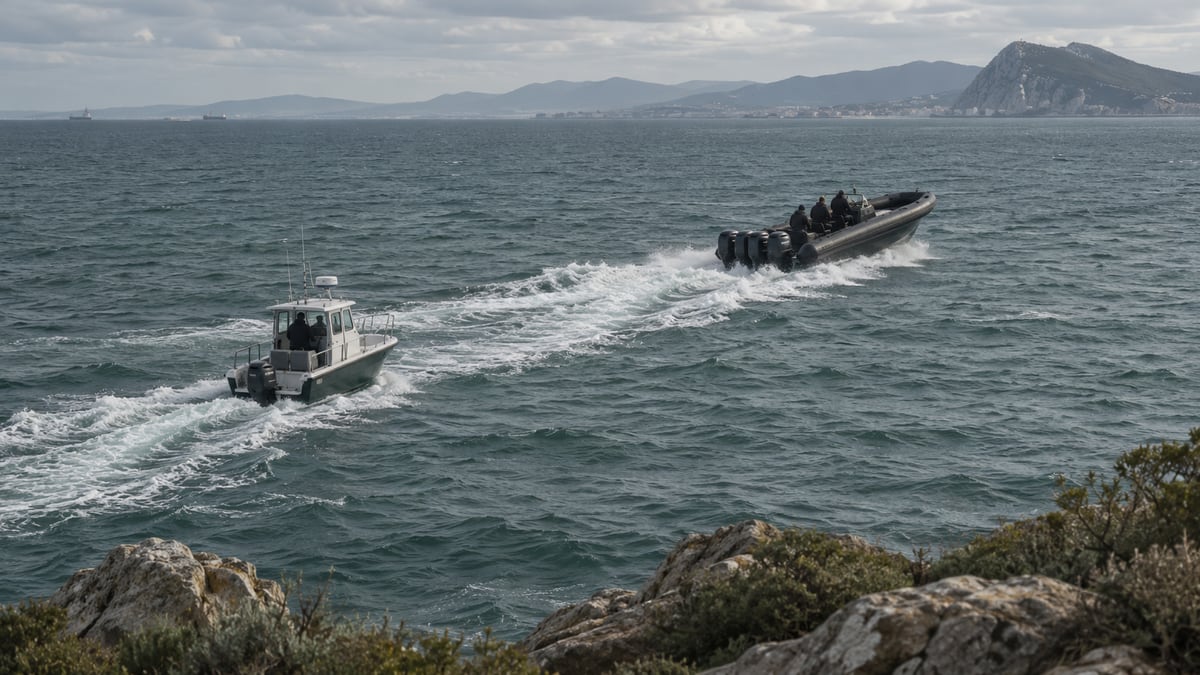
In the dead of night off Spain’s Cadiz region, a 14-metre speedboat with 1,200 horsepower circled a small police vessel of 80 horsepower, then bore down on it, smashing over the boat and crushing six Guardia Civil officers. Two of them, Miguel Gonzalez and David Carracedo, were killed in 2024. They are among several Spanish police officers killed while tackling the trade. The vessels are narcolanchas, powerful drug speedboats tied to what the account calls a “third wave” of cocaine trafficking in Europe.
The cocaine is produced almost entirely in Colombia, Peru and Bolivia. UN figures show production in South America quadrupled to 4,100 tonnes between 2014 and 2024. A major report on drug trafficking in Europe, due next week from the Global Initiative against Transnational Organised Crime (GI-TOC) and shared in advance exclusively with The Independent, says the narcolancha route has become a dominant trend. Leading experts, a top EU official and a senior security source describe this as the new story of Europe’s evolving cocaine trade.
Wastewater analysis by the EU Drugs Agency (EUDA) showed a 22 per cent rise in consumption in Europe between 2024 and 2025. The UK Home Office estimates that 123 tonnes of cocaine was consumed in the year to July 2025, a 26 per cent increase since it began collecting the data in 2021. The boats are described as helping drive consumption on the continent to historic highs.
For years, cocaine was smuggled mainly in concealed shipments through major ports in Northern Europe, a method linked to low prices, high availability and sharp increases in use. With security increasing at those ports, gangs are choosing speed and power rather than concealment.
Ruggero Scatturro, a senior analyst at GI-TOC, says: “It is a battle that law enforcement cannot win.” He says these are probably the worst conditions for police to counter cocaine trafficking because it is very visible and is not about concealment. “Narcolanchas stay at sea for up to one month. They are in broad daylight, they’re just faster, stronger, and more violent.”
Narcolanchas have carried hashish into Spain for decades and are increasingly used by cocaine smugglers. Madrid banned them in 2018. They are built illegally, often in Portugal. The high-speed, semi-rigid boats can carry as many as four engines of up to 300 horsepower each and can travel faster than most police vessels, at up to 80 knots (92 mph). They are similar to speedboats in the Caribbean, originating from Venezuela and allegedly carrying narcotics, that were the subject of a high-profile US military campaign last year.
The boats can carry several tonnes, typically unloaded from a large tanker in the Alboran Sea, between Europe and northern Africa. In a seizure in early September, 3,360 kilos of cocaine were found on a single speedboat near Gran Canaria. Travelling in fleets, the narcolanchas run to the Spanish coast or up its rivers, then hand the drugs to inland gangs who distribute them across the continent on existing lorry networks. Within days, the same powder is described as being used at house parties, in nightclub toilets and in corporate offices across Europe.
A senior source in Spain’s security and law enforcement, speaking anonymously by phone, says authorities are overwhelmed and accuses the interior ministry of failing to equip them. “Guardia Civil are dying in the sea fighting against the narcos. The ministry doesn’t do anything: they don’t give us weapons, they don’t give us boats, they don’t give us nothing,” he says. “We don’t have the appropriate boats. The boats of the narcos are much faster than the police and the Guardia Civil. They have more boats. We maybe have two, or three boats to fight against 100 narcolanchas.”
Asked about those claims, the interior ministry said it has launched the “largest investment in human and material resources ever made in the fight against drug trafficking in southern Spain”. Between January and August this year, it said, authorities made more than 3,660 arrests, seized 140 tonnes of drugs, confiscated 740 “means of transport” and seized around seven million euros. It calls the Gibraltar Plan a “benchmark in Europe for combating drug trafficking”.
In September this year, two officers died when two Guardia Civil patrol boats collided while chasing a speedboat off Huelva, in Andalucia.
Smugglers behind the cocaine trade, described as the world’s most profitable cross-border illegal drug industry, are typically more violent, more powerful and better equipped than those dealing only in hashish. Scatturro says: “They are ruthless; they don’t care, and they are armed.” He calls the degree of violence the worst change, because the merchandise is more expensive and requires more investment and protection. “It’s one thing smuggling one tonne of hash, and another smuggling one tonne of cocaine.”
GI-TOC says years of narcolancha networks built for hashish are a major advantage for cocaine smugglers. “They are not simply boats transporting drugs from one coast to another; they operate within a system of logistical networks that supply vessels with fuel, provisions, replacement crews, and other services.”
On Friday 1 May, earlier this year, eight Guardia Civil officers in dark uniforms and bulletproof vests boarded the cargo ship Arconian after intelligence suggested a huge cocaine shipment in the hold. The intelligence was accurate. On board was the largest shipment authorities had ever seized, at least 30 tonnes, ready to be unloaded onto narcolanchas. Spain’s top criminal court estimated the value at €812m (£680m).
European authorities present that seizure as a tangible result. EU internal affairs commissioner Magnus Brunner, who leads the bloc’s work against drug trafficking, says: “Europe is fighting back. And we are delivering.” He says Spain is on the front line, and that on go-fast boats the EU brought experts and private companies together to cut off criminal networks’ access to the vessels. He suggests criminals are changing their methods because they are under pressure, and that this shows the EU is “on the right track”.
Dutch criminal sources told GI-TOC that the Arconian seizure was partly behind rising cocaine prices in Europe over the past year. The report says there is insufficient evidence of a causal link, but that the case “illustrates the potential impact of removing an exceptionally large consignment from an interconnected wholesale market”.
Narcolanchas remain one route in a diverse, decentralised trade. Routes through ports such as Rotterdam and Hamburg are still in use, although the quantities of cocaine seized there have significantly declined. Tony Saggers, former drugs lead for the UK’s National Crime Agency, says those responsible are spreading their risk and diversifying their methods. Daniel Brombacher, GI-TOC’s Europe director, calls the trade a very agile system and a constant cat-and-mouse game. The account says narcolanchas are for now dominating the seas in southern Europe, and that as efforts against the speedboats are stepped up, the trade will move on to something new.