Cyber scams have reached the job market. Criminals impersonate large companies, publish false vacancies and hold fraudulent interviews, using job seekers’ hope and urgency to obtain highly sensitive personal data voluntarily. Miguel López, Southern Europe director at Barracuda Networks, describes the technique and sets out precautions.
López says the first element exploited is emotional rather than technical: opportunity. After months of searching, a person who is told that their profile fits perfectly wants that to be true. Criminals then combine authority, urgency and a gradual approach. They start with a harmless question, hold a short interview and, once trust exists, request sensitive information. Spain’s cybersecurity institute INCIBE warns specifically about unexpected offers, disproportionate salaries, the absence of a normal selection process, and requests for money or data. López says the old advice to look for spelling mistakes is no longer enough, because artificial intelligence can produce flawless, personalised messages that match human-resources language.
He says it would be a mistake to picture only one person improvising at a computer. Fraud has been industrialised. According to López, 90% of the high-volume phishing campaigns analysed during 2025 used Phishing-as-a-Service kits, tools that let even criminals with little technical knowledge launch sophisticated campaigns. He points to a clear Spanish case: the National Police dismantled an organisation that had built a social-engineering structure around job offers, with company profiles, interviews, requests for documents and bank accounts. More than 40 identities were usurped and 205 scams were detected.
Asked what should make someone close a supposed human-resources chat immediately, López points to a break in the normal hiring process. He says a person should stop if someone they do not know writes on WhatsApp or Telegram, offers the job directly and soon asks for a DNI, bank details, an SMS code, money, or for a bank account to be opened. The domain still matters: a site such as empresa-seleccion.com is not empresa.com, even if it shows the same logo. A professional-looking address or perfectly written text no longer guarantees anything, and a Spanish number or a good profile photo does not show who is behind the account. INCIBE recommends verifying the offer directly with the company through an independent channel before handing over information.
López says WhatsApp or a video call does not automatically make an offer fraudulent. A company may make first contact on WhatsApp, but the candidate should be able to find the vacancy, identify the recruiter and confirm the process independently on the corporate website or by calling the company. The red line, he says, is a process that exists only inside that channel and leaves no verifiable corporate trace. The danger is being moved from WhatsApp to Telegram, then to an unknown form, and finally being asked for documents or money without having been able to verify anyone.
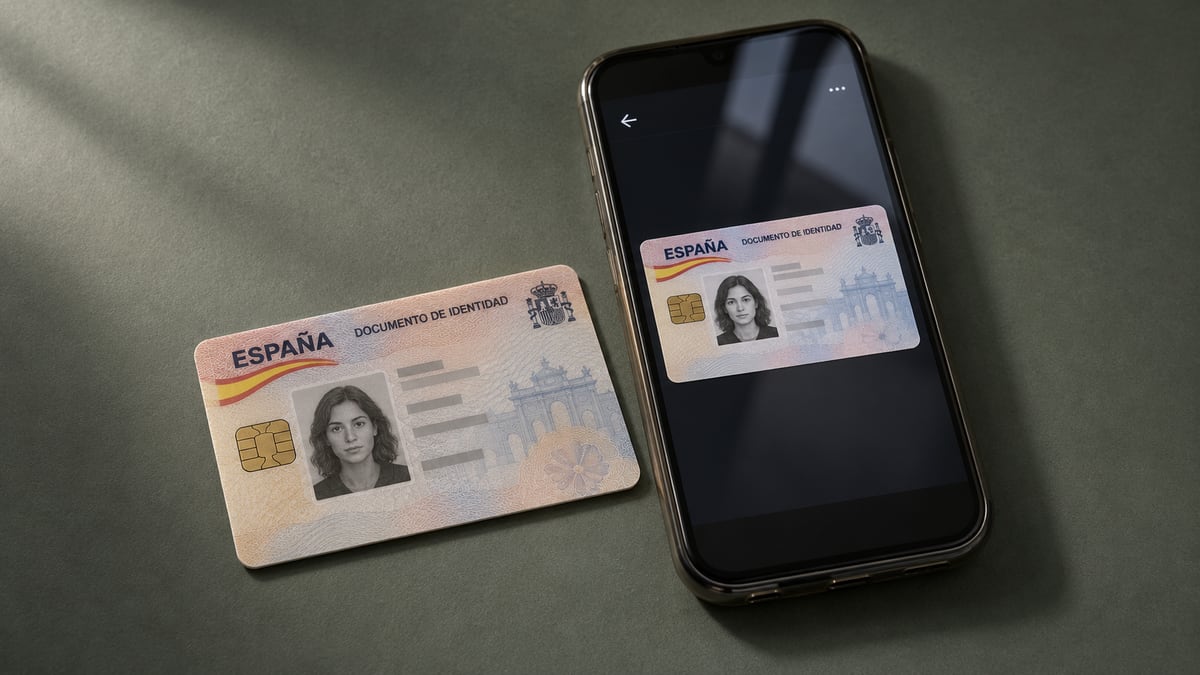
He says a job offer does not mean a photocopy of the DNI is always required. The Spanish Data Protection Agency says that, as a general rule, a copy of the DNI is not necessary to complete a hiring because other ways to verify identity exist, such as an electronic signature. Sectoral legislation can set exceptions. An account number makes sense once hiring is actually under way and the company needs it to set up payroll. Asking for an IBAN and a DNI during a first interview, or before the candidate can establish who is hiring, is abnormal. A still clearer line is that a company does not need a candidate to open an account, receive customers’ money and forward it to third parties. INCIBE has documented fake offers that requested a DNI, bank accounts and money movements.
López says the DNI can turn a simple scam into identity impersonation. It can be used as a verification piece to try to open accounts, contract services or build a false identity for further fraud. The National Police documented an organisation that obtained documents through fake employment contracts and later opened online accounts while impersonating the victims. If someone has already sent a DNI to a fake recruiter, INCIBE recommends reporting it, keeping the evidence and checking with the Bank of Spain whether loans or credit appear in the victim’s name.
Knowing only the IBAN is not the same as holding the keys to the account, López says. Electronic banking operations normally require other authentication. The later risk is that a DNI, name, telephone number and IBAN form a convincing profile for a second attack. A criminal can call while pretending to be the bank, show knowledge of those details and get the victim to reveal a code or, above all, authorise an operation. The same data can be used in identity theft, creating multiple problems for victims, including serious financial and legal problems. A DNI plus an IBAN does not mean the account is emptied automatically, but it greatly increases the credibility of the next deception.
López says obscuring a DNI or adding a watermark helps if it is done properly, but it does not make a fraudulent request safe. The first question should be whether a copy of the DNI is really needed. The data-protection agency recommends hiding unnecessary details such as the support number or the issuing team. If sending a copy is exceptionally necessary, a large watermark of the type exclusively for hiring by company X, dated 22/11/2026, crossing part of the image without preventing the identity from being checked, substantially limits reuse. It is not infallible, because images can be manipulated, but it adds a barrier. He says it is preferable to provide documents through the company’s secure portal rather than as a photograph on WhatsApp or in an ordinary email.
On video interviews, López says criminals can technically impersonate a real recruiter’s image or voice in real time, and a video call should no longer be treated as absolute proof of identity. The technology to alter a voice or face live exists, and criminal networks are adding artificial intelligence to social engineering. A sophisticated deepfake is often unnecessary. It can be cheaper to use a real person playing the recruiter, copy a LinkedIn identity or claim a camera problem. Seeing someone on a video call is not the same as proving who they are. He says verification should use a second channel: locate the company independently, check the corporate email and confirm that the person really works there.
López says these groups do use peaks in mass hiring, because a real recruitment surge makes the story plausible. The same principle applies to Black Friday, Christmas, sales periods, summer hospitality and agricultural campaigns. In August 2026, false job offers using the identities of well-known companies circulated on WhatsApp. All of those companies clarified that their offers are not published through WhatsApp, Telegram or other instant-messaging applications. The supposed recruiter tries to win trust in the message before the person and the company can be verified through an independent channel.